



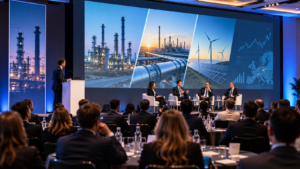
Europe’s electricity market is entering a new stage. But the increasing demand is no longer driven by just industrial development or electrification. AI infrastructure now demands enormous, continuous power to enable high-performance computing and extensive data handling. So governments, utilities, and manufacturers are all competing for the same electricity supplies. This is a challenge beyond the cost of energy. Rather, it is influencing investment decisions, industrial expansion, and long-term buying choices of people and companies. Energy leaders who understand this transition will be better positioned to anticipate a market in which access to electricity will be as important as securing the electricity.
How AI Infrastructure Is Changing the Value of Electricity
AI infrastructure is changing how governments and investors assess the long-term economic value of every new megawatt connected to the grid.
Why AI delivers a higher economic return per megawatt
Electricity investments are now evaluated by governments in terms of the economic impact rather than consumption alone. The AI infrastructure is usually heavily concentrated in healthcare, finance, logistics and manufacturing, and often within a single data centre. One AI data centre, for instance, can run thousands of AI models across a wide range of industries. So every connected megawatt brings value beyond a single business. Also, AI projects draw cloud providers, semiconductor companies and software developers. This broader economic activity prompts governments to give priority to digital infrastructure as it bolsters innovation, productivity and subsequent private investment in all sectors of the economy.
How AI infrastructure is changing public investment priorities
Public investment was once largely directed towards developing electricity networks for the needs of industry and growing populations. Today, AI infrastructure competes for the same funding because countries view digital capability as a strategic advantage. As a result, governments are now steering more investment into substations, transmission upgrades, and high-capacity power corridors. This enables high-end computing. Meanwhile, producers still need power to run electrification and decarbonisation projects. So today, policymakers have to walk a fine line. They are now making decisions that impact economic competitiveness and technological leadership, the growth of industry, and Europe’s ability to attract investment in the future.
Grid Connection Has Become Europe’s New Industrial Advantage
Reliable grid access now influences investment decisions as strongly as labour availability, transport links, & business incentives across Europe.
Why connection queues are delaying industrial growth
Many areas in Europe generate sufficient electricity but cannot hook up new projects rapidly. Existing substations and transmission lines are already running near capacity. As a result, companies frequently wait years for new grid connections. These delays augment the cost of financing and defer production schedules. Pressure is increasing with AI infrastructure because data centers need to be insulated with a lot of electrical capacity. Therefore, utilities need to prioritise connection applications with network expansion. It is now grid availability that dictates the pace at which many industrial investments can proceed.
Why power-ready locations are attracting more investment
Industrial developers today are more likely to consider access to electricity as a priority when choosing a location for a project. Areas with available grid capacity provide a big leg up in competition because companies can start building sooner. And existing substations mean less costly upgrades of the network. This advantage applies to both manufacturers and AI infrastructure projects. Consequently, the areas with good electrical systems see more private investment than similar areas with weak ones. Accessibility of electricity has become a fundamental factor in site selection, on par with skilled labor, transport infrastructure, and a business-friendly environment.
Energy Procurement Is Shifting from Buying Power to Securing Access
Traditional procurement strategies no longer guarantee reliable electricity. Therefore, companies now focus on securing long-term access to power before negotiating energy prices.
Why access agreements are becoming a procurement priority
Industrial customers previously cared only about the price of wholesale electricity, how long their contract was, and how many suppliers were chasing them. Those aspects are still part of today’s equation. But getting seemingly reliable electricity service turns out to be worth more than paying a little bit less for the tariff. As a result, a significant number of large energy consumers enter into long-term capacity contracts, private wire agreements, or corporate offtake arrangements with renewable developers. A few corporations also participate in dedicated generation projects to shield themselves from overburdened grids. Additionally, it gives purchasing departments more confidence because production in the future is reliant on electricity availability, not whether electricity is affordable.
How procurement metrics are moving beyond energy costs
Energy buyers are evaluating risks that rarely appeared on scorecards 10 years ago. In addition to monitoring the cost of energy, they monitor delivery timelines, supply security, the availability of renewables, and potential future capacity limitations. Furthermore, they assess if suppliers have the capacity to grow production in the next 10 to 15 years. These are the indicators that allow businesses to guard against operational disruptions caused by a lack of infrastructure, rather than market volatility. Procurement, thus, has evolved into a strategic business function. Success now requires the building of resilient energy portfolios that enable long-run growth, rather than simply capturing short-term savings.
Europe’s Competitive Advantage May Depend on Power Allocation
Future industrial leadership will depend on how Europe expands and allocates electricity capacity while supporting both digital growth & advanced manufacturing.
Which industries face the greatest exposure to the AI power race?
Exposure is not uniform across all industries. Chemicals, steel, aluminium, battery making, hydrogen production and semiconductor fabrication all rely on continuous, high-volume electricity. As a result, queues for access to the grid can slow down investment and raise operating costs. AI infrastructure also relies on continuous power, as computing workloads are unable to endure regular disruptions. Meanwhile, less electricity-intensive industries are under less direct pressure. So policymakers need to understand which industries generate the highest strategic value for them before investing their limited infrastructural resources. Balanced planning will reinforce both industrial robustness and technological development.
What should energy leaders prepare for next?
Energy officials need to brace for structural changes, not temporary market volatility. First off, they need to monitor national grid expansion plans, as new transmission projects affect investment opportunities down the line. Secondly, they should track electricity market restructuring, permit authorities, and industry-policy trends throughout Europe. They should also deepen cooperation with utilities, developers, and network operators in anticipation of capacity bottlenecks. AI infrastructure is going to continue to grow for years to come. Companies that plan ahead will be quicker to respond as the market changes, and they will have less risk associated with long-term purchasing.
To Sum Up
The electricity landscape in Europe is witnessing transformation by AI infrastructure in ways that go far beyond demand. It informs public investment, transmission planning, industrial policy, and procurement priorities. So electricity access should find consideration by businesses as a strategic, long-term competitive advantage rather than a simple procurement decision. Early-adopting organizations will also build operational resilience and support future growth . Delve into these challenges and practical procurement approaches with leading experts from the industry at the 6th Industrial Energy Procurement & Risk Management Summit on 10–11 September 2026 in Berlin, Germany.