

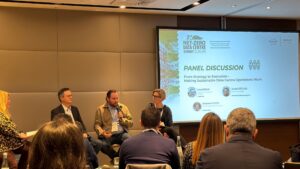
With global temperatures on the rise and carbon emissions under tighter regulations, the food sector is feeling the heat. That’s why the 4th Net-Zero Food & Beverage Forum was the essential event for executives responsible for turning today’s sustainability commitments into engineering solutions of tomorrow. Industry leaders convened to explore how to go from box-ticking to true decarbonisation through innovation. This article presents highlights from each speaker session and features the innovative sponsors that are enabling a greener future for global food production.
Sessions: 4th Net-Zero Food & Beverage Forum
Expert sessions at the 4th Net-Zero Food & Beverage Forum provided a deep dive into the evolving technical and cultural dynamics of a sustainable value chain. Professionals shared their successes and failures to assist others in navigating the complicated path toward zero emissions. This section covers the specific insights shared by global sustainability leaders during the event:
Why We Stopped “Climate Positive” – And What We Do Instead
Speaker: Kaj TÖRÖK, Chief Sustainability Officer, MAX Burgers
The speaker described the sincere pivot behind the decision to discontinue the use of the “Climate Positive” claim. Even after the brand received a UN award, it adjusted its approach. The speaker explained how the company went from buying carbon offsets to establishing a Transformation Fund internally. This change finances more sustainable projects in the future. The speaker further highlighted how the global longevity trend has the potential to cut Scope 3 emissions and drive commercial growth.
Supply Chain Collaboration to Reduce Emissions
Speaker: Andrea BOLHUIS, Sustainability Manager, Burg Group
The speaker centered on the emissions reduction potential in vinegar and syrup production. This session reinforced the need to help suppliers decarbonize their own operations to address Scope 3 targets. The speaker noted that credible reporting is necessary to monitor these gains. Working closely with its partners, the company seeks to develop a transparent supply chain. This process guarantees that the sustainability objectives are achieved at each particular step of the manufacturing process.
Navigating an end-to-end decarbonization journey: Ideation to realization
Speaker: Pedro OLIVEIRA, Specialist Engineer, Siemens
The speaker at the 4th Net-Zero Food & Beverage Forum outlined a path for applying net-zero high-level corporate goals to real projects in the field. It is a big part of that journey to manage technical, regional, and regulatory limitations. The speaker described how to use the technology map to cut through the complexity and make more informed strategic decisions. Experiences were shared from a full decarbonization implementation to help others avoid the most common pitfalls. This session also demonstrated that going from concept to completed project involves engineering and planning.
Electrification in Food & Beverage Processing: A Sustainable Shift in Thermal Management
Speaker: Volker METZGER, Engineering Manager, Watlow
The presenter talked about how electrification is disrupting the industry as we know it by supplanting the traditional heating methods. The shift is driven mainly by decarbonisation and new regulations. The speaker demonstrated leading electric heating and control solutions that provide a competitive edge. This session gave a glimpse into the future of how Thermal management might be more sustainable. By switching to those electric options, companies can have a major positive impact on the environment without compromising on operational excellence.
Improve competitiveness by transforming industry together
Speaker: Dr. Ir. Jan-Maarten GEERTMAN, Director Sustainable Production, The HEINEKEN Company
The importance of separating business growth from water and energy use was stressed by the speaker. A programmatic approach is employed to bring about substantial reductions in CO2 and water consumption. The speaker highlighted the progress achieved in collaboration with the industry. In addition, this session was about the power of collaboration and how, together, we can advance the entire industry. By exchanging best practices, businesses are able to achieve their sustainability goals more quickly and effectively than they could on their own.
Navigating Carbon Reductions And Mindsets in a Global Competitive Context
Speaker: Thomas RØJKJÆR ØSTERGAARD LAURITSEN, Global Sustainability Manager, Arla Foods Ingredients
The speaker considered if a global -scale “best” technology for storing CO2 exists. The session focused on the challenge of combining global leverage with local relevance. In addition, the speaker outlined how the company developed its own CO2 roadmap. Insights gleaned along the way were shared to support others in leading their own transitions. The speaker also highlighted that, when it comes to cutting emissions, the correct mindset is equally as important as the technology itself.
Building a Greenfield for the Future: Sustainable Energy for Next-Gen Protein Production
Speakers: Kristaps GREIDANS, Business Development Director, Adven group & Vents VIKSNA, Head of Development and Finance, ASNS Ingredients
The speakers at the 4th Net-Zero Food & Beverage Forum introduced “Energy-as-a-Service” as a key strategic enabler for new greenfield projects. This approach enables companies to release sustainability and operational efficiency from day one of manufacturing. In addition, the speakers addressed the issue of building next- generation protein facilities that are energy efficient by design. By using this approach, companies can focus on their main products while experts manage the energy infrastructure. So, this session showed a practical way to build a sustainable future for food manufacturing.
Decarbonisation Solutions to Implement Now: The Recovery and Reuse of Waste Heat
Speaker: Sam MAWBY, Director of Engineering, Thermal Energy International
The speaker noted that food production is heat-intensive, and the majority of energy used is at temperatures below 150 °C. Although electrification is a longer-term objective, the speaker indicated that near-term decarbonization credits could be earned via heat recovery. This session gave a glimpse of how waste heat from steam systems and exhausts can be reused effectively. These proven technologies deliver rapid Scope 1 reductions and lower energy costs. Additionally, the speaker used real-world case studies to show how heat recovery serves as a practical stepping stone to net zero.
Südzucker Group: Road Map to Climate Neutrality
Speaker: Dr. Ingo KLENK, Director Environment, Corporate Sustainability & Environment (CSE), Südzucker AG
The spokesperson specified the areas of the company’s operations that are hot spots for carbon emissions. This session elaborated on the targets for reducing Scope 1, 2, and 3 GHG emissions. In addition, the presenter outlined the reduction scheme for both internal operations and external suppliers. Several “lighthouse projects” were cited as positive examples of sustainability efforts. So, this roadmap provided a clear way for a large farming group to achieve climate neutrality.
The Thermal Revolution: Turning refrigeration & heating into your biggest decarbonization tool
Speaker: Jorge de la TORRE JORDÁN, Global Digital Director, Global Products HVAC/R, Johnson Controls
The speaker described how combining refrigeration and heating represents the largest decarbonization opportunity in the industry. This session focused on releasing waste heat from refrigeration to substitute for fossil-based boilers. In addition, the speaker introduced digital twins and AI-based optimization to manage these thermal systems. These instruments contribute to energy reduction and operational resilience enhancement. So the presenter laid out a pragmatic pathway beginning with small “no-regret” projects leading up to fully electrified thermal ecosystems.
Circular Thermal ® – Efficiently Integrating High-Temperature Heat Pumps in Industrial Processes
Speaker: Rossen IVANOV, Managing Director, Armstrong International EMEA
The speaker proposed transforming traditional “one-way” industrial thermal systems into circular ones. The method is particularly applicable for industries that need heat at temperatures less than 200°C, like food and beverage. Furthermore, the speaker applied an original methodology, derived from Pinch analyses, to detect heat recovery possibilities. The facilities can also cut back on primary energy by employing high-temperature heat pumps. This session showed how to enhance thermal efficiency through systematic and science-based energy management.
Energy Centre of Excellence. The organization responsible for driving industrial decarbonisation and accelerating best practices
Speaker: Michele ELEUTERI, Global Energy CoE Lead, Bunge
The speaker spoke about strategic planning and the role of an Energy Centre of Excellence in leading the way for decarbonisation. In addition, the speaker stressed the importance of harmonizing technology and processes at various locations. By turning into a learning organization, companies can disseminate their operational know-how more effectively. So what came out of this session is how a centralized group can help drive best practices across a global enterprise.
Clean Heat for Food & Beverage processes: Heat Pumps and Vapor Recompression
Speaker: Emanuele MAZZOLA, Sales Engineer for renewable heating solutions, Turboden
The speaker at the 4th Net-Zero Food & Beverage Forum introduced various heat electrification technologies and their working principles. This session was a dedicated presentation on large heat pumps and Mechanical Vapor Recompression (MVR). Furthermore, the speaker demonstrated the application of these technologies in real-life cases from the food and beverage industry. With these systems, manufacturers produce clean heat for their processes. So this was the session from a technical perspective on how industrial heat users can switch to non-fossil sources.
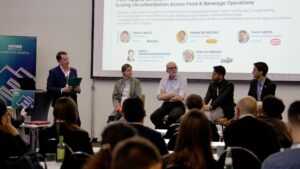
From Targets to Action: Scaling Decarbonization Across Food & Beverage Operations
Moderator: Tomaž OREŠIČ, Vice President, Resalta
Panelists: Matteo DE PASCALE (Rauch), Kristin HECKMANN-KIPOUROS (Mast-Jägermeister SE), Parth VAIDYA (Dr. Oetker), Wim De VRIENDT (Cargill)
The speakers deliberated on the way to transition from basic target setting for Scope 1 and 2. This panel session investigated strategic alignment and how to focus on sustainability investments. The speakers also addressed the issue of phased approaches to higher process temperature operation. They also examined new business and finance models, including Energy-As-A-Service (EaaS). So this conversation did a wonderful job of outlining cross-sector barriers and solutions for scaling decarbonization.
Building a Sustainability Culture: Embedding Decarbonization in Daily Operations
Speaker: Jacob AYIN, Director, Quality Assurance & Thermal Process, Europe, Thai Union
The speaker shared a case study on sustainability in a global seafood corporation. This session describes how to translate sustainability policies into minute operational details. In addition, the speaker touched on the significance of team engagement and measuring progress. Creating governance structures enables sustainability to be built into key business decisions. The speaker also considered how to build a sustainability culture across different functions/regions. So, this session proved that culture is just as important as technology for long-term success.
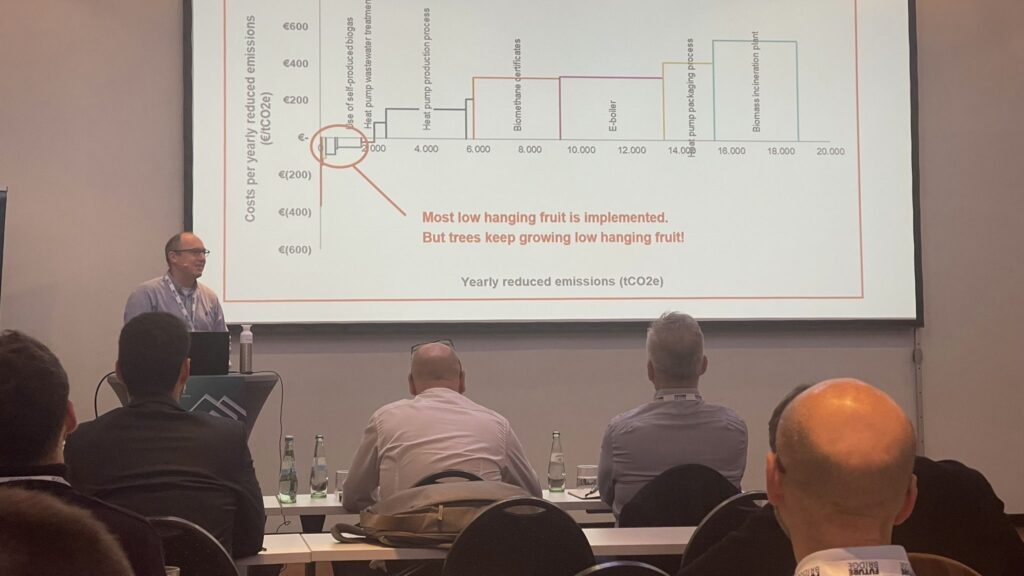
How we can learn from 20 years of improving Energy Efficiency, and apply key lessons to shaping the Net Zero journey
Speaker: Jaap van den HEUVEL, Sustainability Advisory Lead Netherlands, Arcadis
The speaker shared practical lessons learned from two decades of driving energy efficiency. Furthermore, this session takes those lessons and applies them to the current net-zero journey. The speaker discussed how approaches to energy management have evolved over time. Roadmaps for decarbonisation were developed specifically for the food and drink sector. These tailored industry insights enable companies to move forward with confidence. So, the speaker put emphasis on the fact that past experiences are vital for shaping a successful future strategy.
Decarbonizing Operations and Value Chains in the Food & Ag Sector
Speaker: Aarti LÄDERACH, Decarbonization Expert, Louis Dreyfus Company
The speaker reviewed the progress made toward Scope 1, 2, and 3 targets. Furthermore, this session explored various levers for decarbonization and the roadmaps required to reach them. The speaker also discussed greenhouse gas accounting and reporting frameworks for low-carbon products. Key initiatives and partnerships are highlighted as essential for making real progress. So, this session provided a high-level view of how large agricultural companies are managing their environmental impact. The speaker also reports on the progress achieved to date.
Key Pitfalls for Global PPA Offtakers: Navigating renewable energy sourcing across operations and supply chains
Speaker: Damla YUCEBAS, Senior Managing Consultant, South Pole
The speaker highlighted typical mistakes made by parties entering into PPAs in rapidly developing markets. These barriers included changing policy environments and permit delays. Moreover, real-world cases were used to demonstrate effects on corporate commitment to sustainability. The speaker outlined why the risks are worth it and why PPAs remain a powerful tool. Additionally, practical insights were provided on how to secure resilient contracts and mitigate risks. So, this session helped companies align their energy procurement with their emission reduction targets.
Towards Net-Zero Process Heat – CHP and High-Temperature Heat Pumps in the Food & Beverage Industry
Speaker: Abdessamad SAIDI, Business Development Manager, INNIO Jenbacher
The presenter at the 4th Net-Zero Food & Beverage Forum spoke on the application of Combined Heat and Power (CHP) systems in conjunction with high-temperature heat pumps. In addition, this session covered how these solutions can complement each other to provide net-zero process heat. The speaker discussed the advantages of decentralized energy systems for industrial applications. By integrating these systems, producers can raise their energy efficiency while cutting emissions. So this session was essentially a technical deep dive into the machinery necessary to decarbonise heat generation for industry.
Palm Oil: Beyond Deforestation
Speaker: Elias ANGELOPOULOS, Sustainability Manager (Climate/LCA), AAK
The presenter explained the road to decarbonization in palm oil production. Moreover, this session examined the different possibilities and threats to the sector. The speaker presented a case study on palm oil to identify the key emission hotspots. Suggestions are provided on how the industry can address these hotspots effectively. So, this session moved the conversation beyond just deforestation to look at the total carbon impact of the crop. The speaker also highlighted how life cycle assessment (LCA) is a crucial tool for this work.
Process steam from waste heat with high-temperature heat pumps
Speaker: Olli KUISMANEN, PhD, Co-Founder, Chairman, Upheat Solutions
The speaker emphasized that industrial heat is the main key to decarbonization since it consumes 46% of the world’s energy. Much of this energy currently escapes as low-grade waste heat that is hard to reuse directly. Furthermore, this session introduced high-efficiency heat pumps that can elevate this waste heat into usable steam. These systems offer typical payback periods of only one to three years. So, the speaker demonstrated how this technology allows production processes to reuse energy that was previously lost.
Energy Efficiency is black and yellow -> unlocking the savings of the food market
Speakers: Luiz FACCIN, Head of Energy Efficiency & Diego BRATKOSKI, Market Development Manager Food, Klüber Lubrication
The speakers explained how using the right lubrication can contribute significantly to energy efficiency. This session revealed the potential savings possible with this often-overlooked solution. Furthermore, the speakers identified specific machines where these savings can be achieved. Real-world cases are shared to prove the effectiveness of high-performance lubricants. So, this session showed that even small changes in maintenance can lead to measurable energy reductions. The speakers argued that proper lubrication is a simple but powerful tool for sustainability.
Towards sustainable dairy processing
Speaker: Dr. Ir. Gerrit M. WESTHOFF, Global Safety, Health & Environment and Sustainability Director, FrieslandCampina
The speaker at the 4th Net-Zero Food & Beverage Forum outlined the approach for reaching the 2030 targets for carbon and water usage. This session discussed the sustainability labeling of factories based on different environmental aspects. The speaker identified the main challenges and opportunities within the dairy sector. By focusing on both water and CO2, the company aims for a more holistic approach to sustainability. So, this session gave a clear example of how a major dairy processor is planning for a more sustainable future.
Beyond Greenwashing: Decarbonising F&B Through Smart Energy Strategies
Speaker: Younis OSAMA, Principal Energy Consultant, EM3
The speaker urged companies to move from simple compliance to achieving real impact. This session focused on using proven frameworks, such as ISO 50001, to uncover energy inefficiencies. The speaker explained how data-driven audits and advanced monitoring can implement cost-effective solutions. Sustainability should be turned into a strategic advantage by driving return on investment (ROI). So, by lowering operational costs through energy optimization, companies can prove that being green is also good for business.
Costs down for electrification – Thermal Storage allows whole new business model
Speaker: Christian KISSLING, Head of Business Development and Sales, Kraftblock
The speaker discussed how thermal storage can make electrification more economical for food producers. This session explained that thermal batteries can store heat and only take electricity when it is cheap. This unique technology offers a cost-effective way to decarbonize large-scale heat generation. Moreover, the speaker showed how this creates a new business model for managing energy costs and emissions. So, by shifting energy use to off-peak times, companies can reduce their bills while supporting a greener grid.
Driving Energy Decarbonization in Food & Beverage
Speaker: Filipe de OLIVEIRA LOPES, Associate Director, Greenvolt Group
The speaker examined the advantages of utilizing on-site renewable energy generation and energy storage. This session discusses how to build resilient energy strategies for manufacturers. Furthermore, the speaker compares different flexible energy models, such as CAPEX, PPA, and Energy-as-a-Service. Collaborative models and partnerships are presented as ways to scale decarbonization efforts. So, this session provided a guide for companies to accelerate their adoption of green energy through smart financial and operational choices.
Sustainability along the entire value chain, from product development over
Speaker: Matthias POVOLNY, Global Marketing Manager for Consumer Packaged Goods, Siemens
The speaker at the 4th Net-Zero Food & Beverage Forum asserted that sustainability and energy efficiency are no longer just trends but absolute necessities. This session explained that the required measures vary depending on the specific operation and focus. The speaker discussed how the right solutions and services can help tackle challenges at any step of the value chain. By integrating sustainability from product development onward, companies can achieve better results. So, this session offered a comprehensive overview of how technology supports every aspect of the net-zero journey.
Who Were the Sponsors For The 4th Net-Zero Food & Beverage Forum
The success of the 4th Net-Zero Food & Beverage Forum relied heavily on the support of industry-leading organizations. These companies provide the technical expertise, digital tools, and financial models that make large-scale decarbonization a reality. This section introduces the key sponsors and their unique roles in the summit:
South Pole – Premier Networking Sponsor
South Pole is the world’s largest developer of carbon assets and a top provider of climate services. Since 2006, they have worked with governments and large corporations to support ambitious decarbonization goals. With over 1,000 clients globally, they are known for helping Fortune 500 companies build resilient, long-term climate strategies. Their international team has helped direct vital climate finance to more than 850 projects in over 50 countries. During the summit, they helped organizations convert their climate promises into measurable business value and real outcomes.
Siemens – Gold Sponsor
Siemens AG is recognized globally for its pioneering industrial technology and its deep commitment to sustainability. Founded in 1847, the company operates at the convergence of automation, digitization, and engineering. They enable manufacturers to build smarter factories where efficiency and connected systems define high performance. As a major sponsor, they showcased how to modernize energy infrastructure through renewable integration and smart grids. Their commitment to research and digital advancement helps companies move toward cleaner and more resilient operations while shaping the future of sustainable technology.
Adven – Silver Sponsor
Adven is a powerful enabler of the energy transition that partners with customers and cities to develop cost-efficient energy solutions. With approximately 600 employees, they provide district heating, geoenergy, and infrastructure services to both residential and industrial clients. They have over 50 years of experience and operate more than 350 sites across Europe. Their work enhances resource efficiency and allows industries to adopt cleaner and more trustworthy thermal systems. During the event, they were highlighted for their ability to manage complex energy volumes and drive meaningful resource savings.
Armstrong International – Silver Sponsor
Armstrong International has evolved over five generations from a modest startup into a worldwide organization with over 3,000 employees. They provide a wide range of industrial thermal solutions, from steam systems to high-temperature heat pumps. Their products consistently focus on reducing primary energy use to help companies achieve thermal decarbonization. With a close network of representatives across 40 countries, they offer deep technical support for industrial thermal performance. Their role in the 4th Net-Zero Food & Beverage Forum was to show how decades of experience can solve modern energy challenges.
Watlow – Silver Sponsor
Watlow is a world leader in industrial thermal solutions that focuses on enhancing energy efficiency and reducing carbon footprints. Founded in 1922, they revolutionized electric heating and continue to be a leading source for fossil-fuel replacement. Their expertise includes power control, sensing, and software-driven insights that improve process reliability. With over 1,100 patents and 4,000 employees, they serve customers across manufacturing hubs in North America, Europe, and Asia. In the food sector, their systems provide the reliability needed for critical processes like pasteurization and fermentation.
Thermal Energy International – Bronze Sponsor
Thermal Energy International offers solutions that improve thermal efficiency by recovering heat from exhaust streams for reuse. They recognize that no two facilities are the same, so they develop tailor-made solutions that maximize heat production. The company uses high-temperature heat pumps to help customers achieve both short and long-term carbon reduction targets. As a systems integrator, they provide fixed-price solutions with clear performance guarantees. Their work has helped many clients meet their environmental goals while realizing a dramatic reduction in operating costs.
Johnson Controls – Bronze Sponsor
Johnson Controls is a global leader in smart building technology that improves the safety and sustainability of modern spaces. Their solutions include HVAC, fire safety, and energy management services powered by the OpenBlue digital platform. This platform uses IoT sensors and AI-driven intelligence to optimize building performance and save energy. The company also leads in digital twin technology, which helps with precise lifecycle planning for building systems. During the summit, they demonstrated how to turn thermal management into a powerful tool for achieving energy efficiency.
Turboden S.p.A. – Bronze Sponsor
Turboden, a Mitsubishi Heavy Industries company, specializes in Organic Rankine Cycle (ORC) systems for power and heat generation. Their technology uses various energy sources, including biomass, geothermal, and industrial waste heat. The firm has expanded into large-scale heat pumps to aid in the decarbonization of district heating and carbon-intensive industries. Their expertise in efficient heat-to-power technologies makes them a world leader in industrial energy solutions. They provided technical insights on how to capture and use heat more effectively in manufacturing settings.
Arcadis – Bronze Sponsor
Arcadis is renowned for its transformative projects that combine digital innovation with sustainable engineering and design. They serve clients in the environmental, water, and energy infrastructure sectors with a global workforce of over 35,000 people. They take a data-driven approach to solve challenges related to climate resilience and energy security. Present in over 30 countries, they combine a global outlook with deep regional knowledge to deliver strategic results. Their broad portfolio of consultancy and project management supports organizations moving toward future-ready and environmentally aligned operations.
Jenbacher – Bronze Sponsor
Jenbacher, part of the INNIO Group, develops gas engines that run on renewable gases like biogas and hydrogen. Their engines are designed for high efficiency and low emissions in combined heat and power (CHP) systems and microgrids. They use the “myplant” digital platform and AI to monitor system health and provide predictive maintenance insights. With a global installed base of 41 GW, they support decentralized energy strategies across many different industries. At the 4th Net-Zero Food & Beverage Forum, they highlighted how flexible power generation is essential for a successful green transformation.
Kraftblock – Bronze Sponsor
Kraftblock develops large-scale thermal energy storage to help decarbonize high-temperature industrial processes. Their thermal battery can store heat up to 1,300 °C and supply steam or hot water based on process demand. This flexibility allows companies to shift their energy use to times when renewable power is cheaper and more available. This technology can reduce operational costs by a significant margin while lowering carbon emissions. Their solutions support industries like steel, chemicals, and food processing by increasing overall energy reliability and sustainability.
Upheat – Bronze Sponsor
Upheat manufactures oil-free, high-temperature heat pumps that turn low-grade waste heat into usable energy. Their systems produce steam and hot water specifically tailored for energy-intensive sectors like food and beverage. They use magnetic levitation technology to improve efficiency and reliability while reducing the need for maintenance. The modular and containerized design of their pumps makes integration into existing sites much easier. Their approach helps organizations minimize carbon emissions and replace fossil-fuel heating practically and cost-effectively.
Resalta – Panelist Sponsor
Resalta is an energy service organization that specializes in decarbonization and efficiency for commercial and industrial clients. Since 2011, they have developed renewable energy products like solar PV systems, biomass plants, and heat pumps. Their Energy-as-a-Service model removes upfront investment hurdles, allowing customers to upgrade their systems while paying based on performance. With over 400 clients, they manage long-term operations and provide performance guarantees. They blend regional experience with international capabilities to speed up the energy transition in Central and Eastern Europe.
Greenvolt Next – Presenting Partner
Greenvolt Next focuses on the distributed generation of renewable energy by placing solar and storage solutions directly on customer sites. They install and operate rooftop and ground-mounted systems under long-term contracts for industrial and commercial use. Their model supports energy communities where multiple users can benefit from local renewable energy. They offer integrated monitoring and optimization to help clients stabilize their energy costs. By handling full project development and management, they ensure that users have access to clean energy with minimal complexity.
Klüber Lubrication – Presenting Partner
Klüber Lubrication has been a pioneer in the lubricant industry since 1929 and provides high-performance oils and greases. Their products are used in challenging applications across the automotive, pharmaceutical, and food processing industries. With a presence in over 30 countries, they use their technical expertise to enhance machine performance and reduce downtime. Their work in advanced tribology helps organizations extend the life of their equipment and maximize production efficiency. During the forum, they showed how the right lubrication can lead to significant and measurable energy savings.
EM3 – Presenting Partner
EM3 works with industrial energy users to minimize costs while increasing overall efficiency through practical engineering. Their team focuses on clear data and hands-on experts rather than relying solely on automated digital dashboards. They manage the full energy lifecycle, from audits and monitoring to project design and implementation. This approach ensures that clients see real savings in their operating environments rather than just theoretical gains. By aligning actions with ISO 50001 requirements, they help companies keep their energy strategies grounded in reality.
E.ON – Networking Drinks Sponsor
E.ON is one of Europe’s largest energy companies and provides the infrastructure solutions needed for a green future. They manage 1.6 million kilometers of distribution networks and serve about 47 million customers across the region. The company is making significant investments in digital and decentralized energy systems to reduce CO2 emissions. With a workforce of about 77,000 employees, they are focused on building a sustainable energy future through long-term commitment. They played a key role in facilitating the networking sessions that helped industry leaders connect and share ideas.
To Sum Up
Attending professional summits like the 4th Net-Zero Food & Beverage Forum is a necessary step for any leader who wants to stay competitive. These events provide a unique space where engineering expertise meets corporate strategy to create a better future. We get to see the latest technology in action and learn from the people who are already making these changes work. Networking with the world’s top sponsors gives you access to the tools and financing models needed to reach your own sustainability goals. We encourage you to register for the next summit so you can take your seat at the table and lead the way toward a cleaner, more efficient industry.