
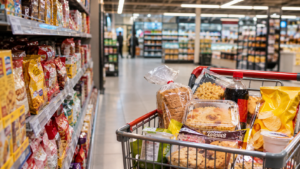


Walk through a supermarket in Germany, France or the UK, and you will find shelves full of packaged cereals, flavoured yoghurt, ready meals, snacks and soft drinks. These products make everyday shopping easier. However, consumers are paying closer attention to what goes into them. Questions about ingredients, nutritional value and processing methods have also reached European policymakers.
The debate around ultra-processed foods is no longer limited to nutrition experts. The European Commission is examining the health evidence. Meanwhile, the World Health Organization (WHO) opened a consultation on a new food-profiling model on 2 November 2026. Neither development introduces a ban. However, both could influence how governments assess packaged food and shape future regulations. Manufacturers now need to consider what these developments could mean for the products they make and sell across Europe.
Why the science behind food processing matters
Not all processed food is made in the same way. Freezing vegetables, pasteurising milk and producing a packaged snack all involve processing, but they serve different purposes. Understanding this difference is important when looking at the health debate.
What counts as ultra-processed food?
Researchers often use the NOVA food classification system to group foods according to the nature and purpose of their processing. It divides food into four categories.
The first covers fresh or minimally processed products, including fruit, vegetables, eggs and milk. The second includes ingredients used in cooking, such as oil, butter and sugar. The third covers processed foods like cheese, canned vegetables and freshly baked bread. The fourth can include industrialised foods containing ingredients and additives you wouldn’t normally add at home.
Snacks, fizzy drinks and instant noodles often fall into this category. During production, many of these products will have added flavouring, colours, sweeteners, emulsifiers and stabilisers.
Having an additive does not necessarily mean the product is ultra-processed. This depends heavily on what additive has been used and how the manufacturer has processed the final product.
This has caused some criticism around the NOVA food classification system. Whilst it categorises based on the processing method, it can be misleading as two products could be classed in the same category despite one containing much less sugar, salt or saturated fat.
What does scientific research say about health risks?
Several large studies have shown that those who consume more ultra-processed foods have a higher risk of developing certain health issues. A 2024 review looked at 45 pooled analyses involving almost 9.9 million participants and showed a link between consuming more ultra-processed foods and conditions such as heart disease, type 2 diabetes, and obesity. However, there was variation in how strong the evidence was.
Another study led by the International Agency for Research on Cancer (IARC), which followed almost 430,000 participants in nine European countries, showed that those consuming more ultra-processed foods were at a higher risk of dying from various causes. This was published in 2025.
Whilst this is an interesting finding, it doesn’t necessarily mean being processed is the cause of disease. Other factors, including overall diet, lifestyle, and health, can play a part. Researchers are looking into how processing, nutritional content, and dietary habits can impact these outcomes.
This does not mean all packaged products pose a risk to manufacturers; however, it gives them a reason to look further into the ingredients and nutritional value of their products.
Why do experts question the NOVA classification?
The NOVA system gives researchers a way to study eating patterns, but its broad categories have attracted criticism. It can place products with very different nutritional profiles in the same group. For example, a packaged food with lower sugar and salt levels may receive the same classification as a product with a less favourable nutritional profile.
The system also does not always account for the useful role of processing. Pasteurisation, freezing and preservation can improve food safety and extend shelf life. These methods serve a different purpose from adding ingredients to change a product’s taste or appearance.
The German Agricultural Society (DLG) examined these limitations in a 2026 expert report. Its work adds to the debate over whether regulators need a more detailed way to assess processing and nutritional quality.
A processing category alone cannot tell consumers everything they need to know about a product. Researchers also need to consider its ingredients, nutritional composition, and manufacturing methods.
What Europe’s changing food regulations mean
Scientific research is only one part of this debate. European authorities are also looking at how they should assess packaged food and whether existing rules provide enough information to consumers. Manufacturers need to understand the difference between a policy discussion and a legal requirement.
Is the EU planning to ban ultra-processed foods?
No. As of November 2026, the European Union has not introduced a blanket ban. The European Commission is reviewing the scientific evidence before considering whether further policy measures may be necessary.
The Commission’s Scientific Advice Mechanism expects to deliver its assessment in March 2027. It will examine definitions, health evidence and possible policy options. The European Group on Ethics is also looking at wider issues. These include consumer choice, access to nutritious food, social inequality and corporate responsibility. Its opinion is expected in spring 2027.
These reviews do not create new legal requirements. However, they could influence future discussions around EU food regulations, nutritional standards and the responsibilities of food businesses.
What does the WHO’s new food-profiling model propose?
On 2 November 2026, the WHO opened a consultation on its draft Integrated Food Profiling Model for Regulatory Measures. The consultation closes on 27 November 2026.
The model aims to help governments identify packaged foods that people should consume in moderation. It considers two main areas: nutrient levels and certain ingredients.
The nutrient criteria cover saturated fat, trans fat, sugars and sodium. The ingredient criteria include flavours, colours and sweeteners that manufacturers mainly use to change a product’s sensory qualities.
Governments could use this model when considering nutrition labels, marketing restrictions and rules for public food purchasing. However, it is not a ban. The presence of one of these ingredients does not automatically make a product unsafe.
The development is worth following for businesses in the processed food industry. It shows that international health authorities are exploring more detailed ways to assess packaged products. Manufacturers should follow the consultation and consider how its final recommendations might influence future policy.
Do European food labels identify ultra-processed products?
Currently, there is no system across the EU, which means manufacturers must classify their products using the NOVA system. Food Labelling legislation currently exists within Europe, which focuses on providing information regarding ingredients, allergens, and nutrition.
Most pre-packed foods must include an ingredient list and nutrition information, including energy, fats, saturates, carbohydrates, sugars, proteins, and salt content, under Regulation (EU) No 1169/2011. Ingredient lists must also be provided in descending order by weight, and any regulated allergens must be highlighted.
Some products have voluntary front-of-pack labelling systems, such as Nutri-Score, to help consumers compare the nutritional qualities. However, this does not indicate the extent or reason for processing.
At the moment, much of the transparency of ingredients used in food products relies on the provision of clear and accurate ingredient and nutrition information. Further policy work will be required at a European level to create a further labelling system for processing.
What the debate means for Europe’s food manufacturers
There are a few practical considerations when considering the debate around regulation. Can we reformulate our products without changing the taste, safety, and shelf-life? Will we see increased costs in our manufacturing processes by using alternative ingredients? How will we be able to demonstrate that our product has truly been improved? Companies will have to consider these factors.
Which products might be investigated further?
A great starting point is the study conducted by the European Commission Joint Research Centre (JRC), which was published in October 2026. This looked at over 180,000 packaged products from 21 European countries.
Products were investigated from 5 areas:
- Breakfast cereals
- Bread
- Fresh dairy and desserts
- Delicatessen meat
- Soft drinks
They found large variation in product nutrition levels; for example, in breakfast cereals, sugar varied from 1g to 28g per 100g. They also found that some areas improved, but others deteriorated within the product category. For example, some products had less sugar but more fat/saturated fat.
This shows that companies will need to look at the overall nutritional quality of their foods. If you only look at one ingredient/nutrient, you may miss out on some areas. Just because a product has less sugar doesn’t mean it is a better product.
Why is it challenging to reformulate food?
When changing a recipe, there are many things to consider. Each ingredient can impact the taste, appearance, functionality, and shelf-life.
Preservatives can help to control the growth of microorganisms. Emulsifiers help to keep ingredients like oil and water mixed. Stabilisers and thickeners can help with the texture of the product. If ingredients are changed, it needs to be considered if the new recipe will function the same.
Reducing sugar and salt can be tricky to do. Sugar helps with sweetening and texture. Salt can help with flavour and can help to control microorganisms in certain products.
Reformulating food can be a technical process. Research and development teams will have to trial the reformulated product to ensure it has the correct taste, texture, nutritional value, safety, and shelf-life. Quality teams will also need to ensure the product meets the correct standard.
How can manufacturers measure improvements in nutrition?
Companies will need accurate data about their products to ensure that they can determine if their product has truly improved. You should track the amount of sugar, salt, saturated fats, fibre and energy in your products (per 100g). You should also look at the portion sizes, ingredient requirements, and shelf-life.
Another useful source is the Food and Beverages Labels Explorer (FABLE). This provides researchers, manufacturers and policymakers with data about labels on packaged foods in European markets. This can help companies to compare products and look for opportunities to improve their food formulations.
This can also help businesses provide evidence to back up claims made about their products. Consumers are becoming more focused on the ingredients and nutritional values in food.
How can manufacturers balance nutrition, cost & sustainability?
A reformulated product can increase the cost of manufacturing. Using alternative ingredients can have higher costs and/or fewer suppliers. Some changes may require new equipment and changes to the manufacturing process.
Companies should also consider any impact on the environment. The alternative ingredient may require more water/energy to produce. A shorter shelf life may cause more spoilage and waste. Changes to the recipe may affect the packaging, transportation, and storage.
Manufacturers should consider the nutritional and sustainable impact of their product. Just because the product has a better nutritional profile doesn’t mean it is more sustainable. Companies should consider the energy used, water used, sourcing of ingredients, packaging, and waste.
In Europe, this will mean working with product development, procurement, quality and sustainability teams.
To sum up
The debate around ultra-processed foods is giving Europe’s food manufacturers more reasons to review product quality, ingredients & production methods. Scientific research and policy discussions may shape future expectations. However, companies should follow the evidence rather than assume that a blanket ban is coming.
The 5th Net Zero Food & Beverage Forum will take place on 12–13 January 2027 at the Eurostars Berlin Hotel in Berlin, Germany. Join industry leaders to discuss sustainable manufacturing, energy efficiency, resource management, & the technologies shaping food and beverage production.
FAQs
Are ultra-processed foods banned in Europe?
No. The EU has not introduced a blanket ban. The European Commission expects scientific advice in March 2027. However, this review does not require manufacturers to remove products from supermarket shelves.
Existing rules on food safety, ingredients, allergens, & nutrition labelling still apply. Companies should monitor future proposals, but they should not treat a scientific review as a new legal requirement. Any additional restrictions would need a separate policy/legislative process.
How can consumers identify ultra-processed foods?
The NOVA system offers one way to assess them. Consumers can read ingredient lists & look for substances rarely used in home cooking. These may include certain modified starches, flavour enhancers, colours & emulsifiers.
However, no single ingredient gives a complete answer. The full recipe/the purpose of each ingredient matters. Shoppers should also compare sugar, salt, saturated fat & fibre on the nutrition panel. A product’s processing category/nutritional quality are related, but they are not interchangeable.
Are all processed foods bad for health?
No. Processing can make food safer, preserve nutrients & extend shelf life. Pasteurised milk/frozen vegetables/canned beans/fermented foods are good examples.
The important question is what the process does to the food and what the finished product contains. Consumers should look at the full nutritional profile rather than assume that every processed product has poor nutritional value.
Does the EU require special labels for ultra-processed foods?
No. EU law does not currently require a label that identifies a product as ultra-processed. Most prepacked foods must display ingredients, allergens, & nutritional information.
Voluntary systems such as Nutri-Score help shoppers compare certain nutritional features. However, they do not show whether a product belongs to the fourth NOVA category. The Commission’s scientific review could inform future discussions, but no mandatory processing label has been adopted.
Will food manufacturers have to reformulate products in 2027?
No general EU rule requires manufacturers to reformulate every product in 2027. The Commission expects scientific advice in March, while the WHO is developing its food-profiling model. Neither development automatically creates a legal obligation for European manufacturers.
Companies should review their product data, keep accurate ingredient records & monitor proposals in the markets where they operate. This will help them respond if authorities introduce new requirements later.
Does the presence of additives mean a food is unsafe?
No. An additive does not automatically make a product unsafe. The EU assesses food additives before authorising their use and sets conditions for their use in food products.
Some additives help preserve food, while others maintain texture, colour or taste. Manufacturers must follow the permitted conditions & use levels. Consumers should consider the complete product rather than judge its safety from one ingredient.
What is the difference between processed and ultra-processed food?
Processed foods may undergo cooking, canning, freezing, pasteurisation, or fermentation. These methods can preserve food, improve safety and make products easier to store.
Under the NOVA system, ultra-processed products generally involve industrial formulations that combine several ingredients and substances not commonly used in home cooking. The distinction depends on the nature/purpose of processing, not simply the number of ingredients.