

Energy procurement is no longer just about finding the right price. Industrial companies now face volatile markets, changing regulations, supply concerns, and growing pressure to decarbonise.
These pressures can make even routine procurement decisions harder. A contract that looks attractive today may carry different risks when market conditions change. Companies also have to consider how energy purchasing fits with operations, sustainability plans, and financial targets.
That was the setting for the 6th Industrial Energy Procurement & Risk Management Summit in Berlin, Germany, on 10 and 11 September 2026. The event brought together senior professionals from energy procurement, sourcing, risk management, finance, legal, strategy and sustainability.
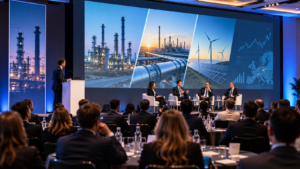
The 6th Industrial Energy Procurement & Risk Management Summit tackled these issues through keynotes, fireside chats, panel discussions and a brainstorming session. The event covered PPAs, hedging, AI, energy contracts, decarbonisation, market volatility and renewable energy sourcing.
Across the two days, discussions looked at energy procurement from several sides. Some sessions focused on technology and data. Others dealt with contracts, financial risk, renewable energy and long-term procurement decisions.
Summit at a glance
| Detail | Information |
| Event | 6th Industrial Energy Procurement & Risk Management Summit |
| Date | 10 to 11 September 2026 |
| Location | Berlin, Germany |
| Main focus | PPAs, gas contracting, hedging, energy procurement and risk management |
| Format | Keynotes, fireside chats, panel discussions and brainstorming |
| Organiser | Future Bridge |
The 6th Industrial Energy Procurement & Risk Management Summit covered ten substantive sessions on its first day and five sessions on the second day.
Day 1: Procurement, AI and decarbonisation
The first day covered some of the biggest changes affecting industrial energy teams. Speakers looked at AI, decarbonisation, legal risks, PPAs and energy portfolio management.
Day 1 sessions
How Energy and IT complement each other during AI transformational journey
Speaker: Chetan Punjabi, Category Head – IT, Energy and New Product Development, Vantage Towers
Chetan Punjabi looked at the growing connection between energy and IT during the AI transformation. The session covered four related areas. Energy powers data centres, while data centres power AI. At the same time, AI can help optimise energy use. The session also raised a broader question about the relationship between energy and AI. Should companies focus on the energy needed for AI? Or should they use AI to improve energy management? The discussion connected digital transformation with the energy requirements that come with it.
From Commitment to Execution: Building Decarbonization Roadmaps That Survive Financial Scrutiny
Speaker: Shokry Habashy, Global Decarbonization Lead | Sustainability and Energy Expert, Webasto Group
Shokry Habashy focused on the gap between decarbonisation commitments and actual execution. The session looked at why many decarbonisation roadmaps fail to move beyond the boardroom. It then examined the sequencing needed to turn energy commitments into self-funding events. Long-term energy contracts also formed part of the discussion. These contracts need to remain manageable when market conditions change. The session also addressed business risks that can build when companies do not have clear accountability for execution.
Navigating Legal Challenges, Dispute Resolution and Risk Protection in Industrial Energy Deals
Speaker: Milla Harloff-Bernyk, Senior Contract Management Leader, Global Purchasing (EPC), Dow
Milla Harloff-Bernyk addressed the legal and commercial challenges that can arise in industrial energy deals. The session covered structured governance and risk management in high-pressure industrial environments. It also looked at practical ways to prevent claims and reduce commercial risks during major projects and turnarounds. Clear roles and decision-making formed another part of the discussion. Accountability also plays a role in building organisational resilience. The session drew on lessons from complex industrial events in challenging and rapidly changing environments.
Managing Long-Term PPAs in Volatile Energy Markets
Speakers: Houman Fakheri, TAPI; Adrien Coudurier, Prosolia Energy; Milla Harloff-Bernyk, Moderator, Dow; Klemens Schepler, Schaeffler
This panel looked at the challenges of managing long-term PPAs in volatile energy markets. The speakers discussed hedging strategies for managing long-term price volatility. They also looked at contract structures that can provide pricing stability while allowing operational flexibility. Financial, regulatory, and operational risks can change throughout a contract’s lifecycle. The panel considered how companies can account for these risks when managing long-term agreements. The discussion brought procurement, commercial and contract management perspectives together around one of the key topics in industrial energy procurement.
Sustainability in CapEx Investment Projects
Speaker: Bjoern Wendel, Head of Investment Projects Sourcing – Central Europe Group Procurement, Merck KGaA
Bjoern Wendel looked at how companies can set up and execute CapEx projects in line with sustainability targets. The session covered the criteria and measures that can guide these projects. It also looked at identifying and assigning appropriate suppliers. Internal and external expertise can support this process. Platforms and certifications can also play a role. The discussion connected procurement with sustainability at the investment project level. It focused on the practical steps companies can take when they need to bring sustainability targets into project planning, supplier selection, and execution.
AI Energy Managers: Data, Risk & Opportunity
Speaker: Jack Eastwood, Commercial Director, Companion Energy
Jack Eastwood explored how AI can support energy procurement and risk management. The session covered the use of large language models to optimise procurement, build business cases and assess hedging strategies. It also looked at algorithms that can forecast energy consumption. These forecasts can help companies identify flexibility and respond to price volatility. The discussion then moved beyond forecasting. AI-driven participation in energy markets can help companies make better use of their assets and create new revenue opportunities. The session connected data, risk management, and commercial decision-making.
RETEX Orange: Using batteries, solar, and VPPs with AI to optimize costs and reduce risks
Speaker: Elisabeth Lucas, Program Manager for Group Efficiency, Orange
Elisabeth Lucas discussed the use of batteries, solar, and virtual power plants alongside AI. The session looked at how these technologies can support resilient and smarter energy management. It also covered innovative financing through VPP valorisation. AI-driven forecasting formed another part of the discussion. So did cost optimisation and risk mitigation. The session also considered technology choices, interoperability and control strategies. Together, these topics addressed how companies can manage different energy assets while using digital tools to improve forecasting, control costs and manage risk.
A Procurement-Led Roadmap to Decarbonization Without CAPEX: Integrating Physical Hedging, VPPAs and Supplier Engagement
Speaker: Houman Fakheri, Associate Director, Global Category Manager Energy & Utilities, TAPI
Houman Fakheri looked at how procurement can support decarbonisation without significant capital investment. The session examined why decarbonisation initiatives can fail before execution. It also explored how procurement’s role in corporate energy transition is changing. Physical energy sourcing and renewable procurement formed key parts of the discussion. VPPAs were considered alongside traditional hedging. The session also introduced a three-phase framework for delivering decarbonisation without significant CAPEX. Long-term supplier partnerships were another focus. These relationships can create value for both buyers and energy developers.
Industry’s new energy reality: volatile, complex, data-intense
Speaker: Manuel Giselbrecht, Managing Director / Head of Operations / Partner, INERCOMP
Manuel Giselbrecht addressed the growing complexity of energy procurement and portfolio management. The session looked at the value of having one standard for energy procurement and portfolio management across an organisation. Reliable price and load data formed a key part of this approach. The discussion also covered connected workflows. These can help teams focus on strategy and opportunities. Clear reporting standards were another area of focus. The session also highlighted the value of having quick answers in one place when teams need to make energy-related commercial decisions.
When Contracts Meet Reality: Risk, Law, and Market Stress in Industrial Energy Procurement
Moderator: Christian Essers, Vice President, Global Energy Procurement, Wacker Chemie AG
Panelists: Nicolas Eschenbruch, Project Lead, Marktoffensive Erneuerbare Energien (dena); Zaid Imam, Head – Direct Procurement, Vantage Towers
The panel looked at what happens when industrial energy contracts face sustained market pressure. Pricing, flexibility and market assumptions were among the areas discussed. The panel also considered how risk allocation between buyers, suppliers and traders is changing in volatile European markets. Another issue was the gap between legal contract design and commercial reality. When contracts underperform, companies may need to consider renegotiation, hedging or legal routes. The discussion also looked at what contract resilience means when market conditions challenge the assumptions behind an agreement.
Day 2: Market volatility and renewable sourcing
The second day of the 6th Industrial Energy Procurement & Risk Management Summit moved towards market trends, procurement practice and renewable energy sourcing in Germany. The sessions continued to address risk and changing market conditions.
Day 2 sessions
Energy Procurement in a Changing Market
Speaker: Christian Essers, Vice President, Global Energy Procurement, Wacker Chemie AG
Christian Essers discussed how energy procurement has changed across global industrial businesses. The session looked at the challenge of balancing cost, supply security, and sustainability across different markets. It also considered lessons from the energy crisis. Changes in approaches to long-term contracts and risk formed another part of the discussion. Looking ahead, diversification can play a role in preparing for future volatility. So can market intelligence and smarter procurement decisions. The session placed energy procurement within a wider business context rather than treating it as a standalone purchasing function.
Future Trends in the Energy Market: Risk, Policy, and Industrial Reality
Speaker: Tanguy Poline, Energy and Decarbonisation Expert, Air Liquide
Tanguy Poline explored the relationship between energy policy and industrial reality. The session covered risks linked to renewable growth and decarbonisation. It also looked at emerging challenges that could shape global energy markets. The discussion considered the longer-term energy landscape towards 2030. However, the session did not focus only on future trends. It also addressed residual risk after optimisation, market shocks, and structural breaks. Portfolio-driven strategies need to retain flexibility when conditions change. The discussion connected policy, market developments, and the practical concerns facing industrial companies.
Industrial Procurement in Practice: From Models to Market Reality
Session type: Brainstorming session
The brainstorming session focused on the risks that can remain even after companies optimise their energy procurement strategies. It looked at how businesses can deal with market shocks and sudden changes that disrupt existing plans. At the same time, companies need enough flexibility to adjust their portfolios as market conditions evolve. The discussion also highlighted the limits of relying on fixed procurement models. Instead, energy teams need to keep reviewing their strategies and adapt them when market risks, prices, or wider conditions change.
Managing market volatility
Speaker: Thiago De Sa Almeida, Head of Energy and Commodities Procurement, BMI Group
Thiago De Sa Almeida addressed market volatility through three areas. These included extreme price swings, financial instruments, and operational requirements. The session looked at how companies can plan for sharp changes in energy prices. It also covered the need to balance financial instruments with market exposure. Energy strategy must still reflect operational needs. That can affect how an industrial business responds to market movements. The session connected financial risk management with day-to-day operational requirements. It focused on preparing for volatility rather than simply reacting when prices move sharply.
How to source renewable energy in Germany from 2027 onwards
Speaker: Nicolas Eschenbruch, Project Lead, Marktoffensive Erneuerbare Energien (dena)
Nicolas Eschenbruch looked at renewable energy sourcing in Germany from 2027 onwards. The session examined how the market could change once current support mechanisms and market conditions shift. EEG reform and grid development were also part of the discussion. Both could affect how companies source and contract renewable power. The session also looked at what buyers should expect from pricing as the market evolves. It considered the factors behind those changes. Finally, the discussion addressed where companies may find favourable renewable sourcing opportunities and when they should act.
Event partners
The 6th Industrial Energy Procurement & Risk Management Summit also featured four event partners. They represented different parts of the energy market, from AI-enabled energy management to renewable energy and procurement services.
Event partners at a glance
| Partner | Role |
| Companion.energy | Bronze Sponsor |
| INERCOMP | Bronze Sponsor |
| Prosolia Energy | Panelist Partner |
| trawa | Exhibition Partner |
Companion.energy | Bronze Sponsor
Companion.energy is an AI-native energy management platform for large manufacturing companies. Its offering covers energy costs across several areas. These include procurement strategy, hedge performance, non-commodity costs and carbon reporting. The company says its AI approach focuses energy teams on what is most valuable. It does not focus on data visualisation or report presentation. This positioning connects with the wider technology themes covered at the event.
INERCOMP | Bronze Sponsor
INERCOMP is an independent expert for energy markets. The company combines consulting with its eTools cloud platform. It provides a basis for commercial energy decisions. Its work supports industrial buyers and portfolio managers as they evaluate, hedge, and steer their energy positions. INERCOMP also states that it analyses the markets while clients make the decisions. This approach fits the focus on energy data and commercial decision-making that ran through the event.
Prosolia Energy | Panelist Partner
Prosolia Energy is an IPP that delivers tailored multi-energy solutions across Europe and Mexico. Its project portfolio exceeds 4 GW. The company develops distributed generation and utility-scale projects. It also provides asset management and operations and maintenance services. These activities aim to accelerate clients’ energy transition and competitiveness. Prosolia Energy joined the event as a Panelist Partner. Its role was also connected with the event’s focus on renewable energy and PPAs.
Trawa | Exhibition Partner
Trawa is an established energy provider. It helps companies reduce their electricity costs by up to 30% per year. The company makes energy procurement methods used by energy-intensive corporations more accessible. Its services include cost-optimised energy supply, digital energy management software and flexible control of energy assets. More than 250 companies in Germany and Austria use its solutions. It names FlixTrain, Maritim Hotels and Conrad Electronic among its customers. Trawa was the Exhibition Partner at the event.
To sum up
The 6th Industrial Energy Procurement & Risk Management Summit brought several parts of the industrial energy challenge into one event. Speakers discussed PPAs, hedging, AI, decarbonisation, contracts, market volatility and renewable sourcing.
The sessions also showed how closely these issues now connect. Energy buyers have to consider cost, supply security and sustainability together. Contract decisions can also affect financial exposure and operational flexibility.
The event in Berlin offered different perspectives on these challenges. Speakers came from industrial companies, energy providers and specialist organisations. The event also created space for panels, informal discussions and networking between delegates.
For professionals working in energy procurement, sourcing, risk management and sustainability, attending future summits can be a useful way to hear from industry peers. It can also help them follow market developments and compare approaches to the energy challenges facing industrial businesses.